November 2026 | Northwest Tennessee Local Food Network
Maybe there’s a dish at your Thanksgiving table that everyone knows who’s bringing. It’s the sweet potato casserole someone makes from memory, the greens that have been simmering all morning, or the cornbread dressing that tastes like home. Behind each dish are people who grew the ingredients, passed down the recipe, or took the time to make it for someone else.
This November, we’re taking a moment to thank the people who feed Northwest Tennessee, from the farmers who grow our food to the school nutrition teams who make sure students have a meal waiting for them every day.
Good food starts close to home
One of the best parts of buying from a local producer is getting to ask, “How do you like to cook this?” You might go home with a winter squash and a new way to roast it, or with a jar of local honey you’ll pull out long after the holidays.
If you’re planning a holiday meal, start with one ingredient. Check with a nearby farm or market to see what’s available, then build a side dish around what you find. When someone asks what you brought, you’ll have a farmer’s name to share along with the recipe.
A thank-you to the people who feed our students
We’re also grateful for the people who make food education possible in our schools. Through our C.H.E.F. program, Children’s Health through Education and Food, students get to try new recipes, practice kitchen skills, and tell us what they think.
At Lake County High School, culinary arts students helped Chef JuSy with a taste test of Apple Cheddar Melt Wraps. Sixty-four students voted yes. Behind that taste test were students willing to give a new recipe a try and school partners who made time for it in the middle of a busy day. Those small moments give students a say in what they’d like to see on the menu.
To the cafeteria teams, teachers, administrators, and students who make this work possible, thank you for welcoming us into your schools.
Who helps feed your community?
Think of the farm stand you always stop at, the bakery you recommend to friends, or the market where you know the vendors by name. If you know a farm, food business, farmers market, or community organization that belongs in our 2027 Northwest Tennessee Local Food Guide, encourage them to sign up for a free listing. It’s one way to help more neighbors find the people and places you already count on.
And the next time you pass a favorite dish around the table, tell someone who grew it, who taught you to make it, or who always asks for seconds. Those are the stories we’re grateful to share.
If you’re looking for one way to bring something local to your Thanksgiving table, start with sweet potatoes. This cozy side pairs a cinnamon-spiced sweet potato filling with a buttery pecan topping. It’s the kind of dish that might earn a spot on next year’s menu, too.
Sweet Potato Delight is a featured dessert at Milan Special School District’s Thanksgiving meal. This November, our partner schools are receiving boxes of sweet potatoes from Stele Plant Farms in Gleason, Tennessee, bringing a locally grown ingredient to school kitchens across our region.
Preheat the oven to 350°F and lightly grease an 8-inch square baking dish.
In a large bowl, stir together the mashed sweet potatoes, brown sugar, butter, milk, eggs, vanilla, cinnamon, and salt. Spread the mixture evenly in the baking dish.
In a separate bowl, combine the pecans, brown sugar, flour, and melted butter. Sprinkle the topping evenly over the sweet potato mixture.
Bake for 30–35 minutes, until the topping is golden and the center is set. Let it rest for 10 minutes before serving.
A little prep ahead. Cook and mash the sweet potatoes the day before, then refrigerate them so they’re ready to mix when it’s time to bake.
The Northwest Tennessee Local Food Network (NWTN LFN) is proud to announce the winners of the 2026 #GrowFoodChallenge, a regional initiative designed to inspire youth and families to grow food, reduce food waste through composting, and strengthen local food security across Northwest Tennessee.
Weakley County participants claimed both second and third place honors. Clayton Ward received the $100 second-place award, while Brooks Crowe earned third place and a $75 cash prize.
This year’s challenge engaged 310 participants from across the region who accepted the challenge to plant, grow, learn, and share their gardening journey through themed photo and video submissions. Participants received free seeds, educational resources, and opportunities to win prizes while building lifelong skills in gardening, nutrition, and environmental stewardship.
2026 #GrowFoodChallenge Winners
Grand Prize Winner ($250): McKenzie Early Head Start (Carroll County, TN) received the Grand Prize
Second Place Winner ($100): Clayton Ward received a $100 cash prize for his photo submission showcasing his gardening efforts.
Third Place Winner ($75): Brooks Crowe received a $75 cash prize for his photo submission and commitment to growing food.
“The true winners of this challenge are all 310 participants who chose to grow something this year. Every seed planted represents healthier families, stronger communities, and a more resilient local food system” – Samantha Smith Goyret, Co-Director of the Northwest Tennessee Local Food Network
Growing a Healthier Northwest Tennessee
The #GrowFoodChallenge encourages individuals, families, schools, childcare centers, and community groups throughout Northwest Tennessee’s nine-county region to grow food, compost food scraps, and share their experiences through themed photo submissions. Participants learn that gardening can happen anywhere—from large backyard gardens to raised beds, community plots, porches, and even windowsills.
This year, 7,763 free seed packets were distributed throughout Northwest Tennessee thanks to generous donations from International Seed Company and the Society of St. Andrew, helping remove barriers to gardening and making fresh food production accessible to more families.
Thank You to Our Seed Distribution Partners
NWTN LFN extends sincere appreciation to the fifteen community organizations and agencies that served as seed distribution partners, helping connect residents with free seeds and educational resources throughout the region. Their commitment ensured that participants from Benton, Carroll, Crockett, Dyer, Gibson, Henry, Lake, Obion, and Weakley counties had convenient access to the tools needed to begin growing food and reducing food waste.
Most importantly, we thank all 310 participants who joined the 2026 #GrowFoodChallenge. Whether you planted a single herb on a windowsill, built a raised-bed garden, started a compost pile, or grew food to share with neighbors, your efforts made a difference.
Together, you have demonstrated that local food begins with local action.
As Northwest Tennessee continues building a thriving and equitable food system, the #GrowFoodChallenge remains a powerful reminder that growing food not only nourishes our bodies, it strengthens communities, supports food security, and creates lasting connections to the land and one another.
For more information about the #GrowFoodChallenge and other Northwest Tennessee Local Food Network programs, visit the #GrowFoodChallenge page.
About Northwest Tennessee Local Food Network
The Northwest Tennessee Local Food Network serves as a catalyst for a thriving and equitable local food system that is accessible to all. Through education, community engagement, farm-to-school initiatives, and local food system development, NWTN LFN connects farmers, schools, organizations, and residents to create healthier communities and stronger local economies. #Getitlocal Learn more at nwtnlfn.org.
Gibson County, TN – Students in Milan Special School District and Trenton Special School District got a flavorful lesson in nutrition this week as both districts proudly participated in “Eat Real Week,” serving up fresh, locally sourced, and scratch-prepared meals as part of the Eat Real certification initiative.
The Eat Real certification program recognizes school districts that are committed to serving nutritious, freshly prepared meals made with wholesome ingredients. To qualify, districts must meet rigorous standards, including offering a wide variety of fresh fruits and vegetables, preparing meals from scratch multiple times per week, and incorporating whole grains and diverse menu options.
During the assessment week of April 20–24, both districts exceeded expectations by offering:
Six varieties of fresh fruit per week, including bite-sized options for younger students
Up to 15 fresh vegetable offerings weekly at middle and high schools
Scratch-cooked items at least three times during the week
Whole grain options such as brown rice
Ten unique lunch entrée choices, including both hot meals and grab-and-go options
Fresh, Locally sourced Ingredients Take Center Stage A highlight of the week was the use of locally sourced ingredients that brought farm-to-school connections directly to students’ plates. Both Milan & Trenton schools featured fresh strawberries from Green Acres Farm out of Milan, TN.
Collectively both Milan and Trenton Schools purchased a total of 42 flats of Green Acres strawberries that fed a total of 2,450 students in 6 Gibson County schools (Milan: 1,400) (Trenton: 1,050).
Trenton Special Schools incorporated Tennessee-grown rice from Tennemo Rice during their Taste Test Thursday on April 23, 2026 at Trenton’s middle and high schools serving scratch-made Pineapple Rice. John Shultz of Tennemo Rice visited the middle school cafeteria to showcase a range of locally grown rice varieties, guiding students through a hands-on learning experience where they explored each type by smelling, observing, and feeling the grains while discovering their subtle differences.
Connecting the community (left to right): Caroline Ideus – Co-Director NWTNLFN, to the Cafeteria: TSSD Fresh Chef “Turtle” Brandon White (not in the picture are Chef Keely Spain and Chef Cale Meador – also TSSD Fresh Chefs), to the Classroom with farmer presentation from John Shultz from Tennemo Rice Co. at Trenton Rosenwald Middle School on April 23, 2026.
Trenton also sourced local beef from Stockyard Market serving over 1,000 students locally raised and procured beef burgers.
Menus also showcased a strong emphasis on scratch cooking and batch preparation. Staff prepared items such as house-made ranch dressing, creamy coleslaw, and fresh fruit salad assembled by a coordinated team effort.
Vickie Dunaway, School Nutrition Supervisor for Milan Special School District, praised the dedication of her team: “Our cafeteria staff go above and beyond every day. They are excited to try new recipes, take pride in preparing more meals from scratch, and are deeply committed to serving food that our students not only enjoy, but that truly nourishes them.”
Growing Food and Future Leaders Right at School Beyond sourcing locally, both districts are also growing their own fresh produce on campus.
Milan Elementary School Cafeteria manager Denise “Neecy” Jones teaches 4th grade students how to plant, grow and harvest lettuce and herbs from the hydroponic grow tower in the Cafeteria, giving students hands-on experience in food production. Watch the MES harvest video HERE.
At Peabody High School FFA in Trenton, work-based culinary learning student Chloe Pack (photo below on the left) played a key role in harvesting fresh cherry tomatoes, bell peppers, and basil used on the school salad bar. These hydroponically grown vegetables are part of the school’s FFA program, which is also hosting a month-long plant sale throughout April. The sale is open Monday through Friday from 9 a.m. to 4 p.m. and Saturdays from 9 a.m. to 1 p.m., offering the community an opportunity to support student agriculture while bringing home locally grown plants. Watch Peabody’s FFA Plant Sale Video.
A Week of Wholesome, Student-Friendly Meals Students enjoyed a wide range of meals throughout the week, including:
Chicken tenders and scratchmade ranch dressing with veggies
BBQ pulled pork mac and cheese
Fresh-cut vegetable sides like broccoli, school grown sweet pepper strips, and edamame beans
A vibrant fruit salad featuring grapes, watermelon, honeydew, and local strawberries
Asian-inspired cherry blossom chicken with rice and freshly prepared sweet potato chips
Classic favorites like cheeseburgers served alongside creamy coleslaw and fresh fruit
Grab-and-go options such as Southwestern box meals and fresh salads ensured accessibility and convenience without sacrificing nutrition.
Breakfast offerings also aligned with Eat Real principles, incorporating fresh fruit, whole grains, and balanced options like chicken biscuits, apple crisp, and sausage, egg, and cheese bagels.
Building Healthy Habits for the Future By participating in Eat Real Week, Milan and Trenton Special School Districts are reinforcing their commitment to student health, local agriculture, and high-quality school meals.
“This week demonstrates what’s possible when schools prioritize fresh ingredients and thoughtful preparation,” said Lisa Seiber-Garland, Trenton School Nutrition Director. “We’re not just feeding students, we’re helping shape lifelong healthy habits, educating students about their local farms and seasonality of foods, as well as supporting our farmers in our community.”
Plate Waste Data Study – How much are students eating, how much is wasted, how to improve school meals while reducing waste?
Measuring food waste in school meals might sound like a small operational detail, but it’s actually one of the most powerful tools schools have to improve nutrition, save money, and reduce environmental impact. This week Trenton Elementary School (TES) has participated in a week-long plate waste data study. When a districts partner with groups such as Healthy Flavors, TN, Palomar AI, and the Northwest Tennessee Local Food Network to conduct a plate waste study, it turns everyday lunch periods into meaningful data that can drive real change.
Tablets scan a before and after image of each student’s tray utilizing a QR code to connect the data to the tray. Samples were taken with 2-4th graders at TES. Students who do not eat whole foods, such as apples, are encouraged to share their uneaten items on the TES Share Cart.
Strengthening Impact Through Local Partnerships The success of initiatives like Eat Real Week is made possible through strategic funding and strong local partnerships that provide guidance, resources, and technical expertise. Organizations like EatReal.org and the Northwest Tennessee Local Food Network play a vital role in supporting school districts as they expand farm-to-school efforts. Through technical assistance, training, and connections to regional producers, these partnerships help schools confidently source local ingredients, implement scratch cooking practices, and build sustainable programs. By working together, schools and community partners are creating a resilient local food system that benefits students, farmers, and the broader community alike.
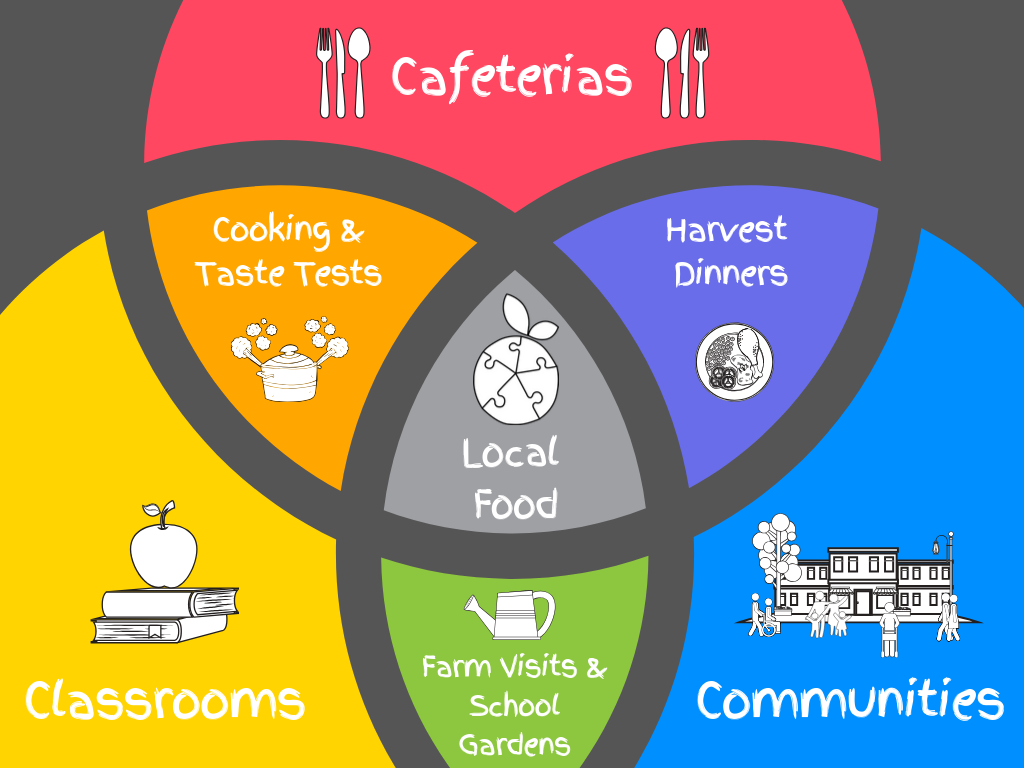
Connecting the 3 C’s: Classroom, Cafeteria, and Community From students harvesting lettuce in cafeteria grow towers, to learning agricultural skills through FFA programs, to families supporting school plant sales and local farms, Milan and Trenton Special School Districts are bringing the full vision of Farm to School to life. By intentionally connecting the classroom, cafeteria, and community, these districts are creating a sustainable model where education, nutrition, and local agriculture reinforce one another ensuring students not only eat real food, but understand where it comes from and how it strengthens their Tennessee communities they call home.
It truly takes a community to feed our children in Northwest Tennessee. Meet our FRESH Team of project partners (left to right), Chef Marion Williams from Wellness in the Schools, Debbie Moncrief – Bradford SSD School Nutrition Director, Rip Weaver – FDA Grant Program Director, Caroline Ideus – Co-Director, NWTNLFN, Samantha Smith Goyret – Co-Director, NWTNLFN, Chef Cale Meador – C.H.E.F. Ambassador and Fresh Chef, Vickie Dunaway – Milan SSD School Nutrition Supervisor, Lisa Seiber-Garland – Trenton SSD School Nutrition Supervisor, Chloe Pack – Peabody HS Student Culinary Work-Based Learner, Chris – former Bradford School Nutrition Director, Holland Brewer – Owner of Stockyard Market, Karen Brazzeal – Healthy Flavors, TN, Kelly Hays – Thaden School, AR, and Trista Snider – Northwest Tennessee School Nutrition Consultant and former School Nutrition Director of Weakley County Schools.
Join the Tennessee Farm2Future Coalition Interested in learning more about connecting the Farm to the School? Join our monthly virtually meetings with the Tennessee Farm2Future Coalition. Learn more here.
~Written by Samantha Smith Goyret LFN Team Blogger
Trenton, TN — In school kitchens across the Trenton Special School District, a team of three professional culinary Chefs are redefining what it means to nourish students for the ‘25-’26 school year. Through hands-on culinary leadership, strong local partnerships, and deep engagement with students, these chefs are driving a district-wide shift toward whole foods, less processed foods, food literacy, and long-term community well-being.
“Our Chefs are mentoring staff every day, showing them how to work with fresh ingredients, introduce new menu items, and feel proud of the food they serve,” said the Trenton School District School Nutrition Director, Lisa Seiber-Garland. “That training shows up on the tray, and it shows up in students’ willingness to try foods that are fresh, whole, and new to them.”
Rosenwald Middle School Cafeteria Staff in orange, with Fresh Chefs: Keely Spain and Brandon White, next to with Joyce Klidies from the Northwest Tennessee Local Food Network, and in the front are work-based learning culinary students from Peabody High School.
To support this shift toward scratch cooking and whole-food preparation, Trenton SSD is also investing in updated kitchen equipment. Planned upgrades include Rational ovens, immersion blenders, and kitchen supplies which all increase efficiency, improves food quality, and expands the range of meals that can be consistently prepared at scale. These investments will empower staff to confidently prepare fresh soups, sauces, roasted vegetables, and from-scratch entrées, ensuring that the culinary training is matched with the infrastructure needed to sustain long-term success.
This semester, Trenton SSD school menus feature “Taste-It Thursdays”, a school-wide day featuring new items or taste testing sampling. Beyond the kitchen, Trenton’s chefs are partnering with educators to engage students as active participants in the food system. Through culinary arts afterschool, FFA hydroponic growing projects and work-based learning programs, students are learning life skills that directly influence what they choose to eat. Early indicators show that when students are involved in growing, preparing, and promoting food, they are more likely to select and enjoy whole-food options, creating a positive feedback loop that reinforces healthier choices and a culture of curiosity around food.
Through continued collaboration with the Northwest Tennessee Local Food Network (NWTNLFN), Wellness in the Schools (WITS), and the Healthy Flavors FRESH Network food hub, this forward-looking approach strengthens the entire school food ecosystem: aligning Chefs, educators, producers, and students around a shared commitment to whole foods, skill-building, and community well-being. By creating clear pathways for partnership, innovation, and long-term continuity.
Trenton, TN Parents/Guardians
Take 3 minutes for the future of school meals at Trenton Special School District.
October is #National Farm to School Month, a time to celebrate the connections happening all over the country between children and local food. From taste tests in the cafeteria and nutrition education activities in the classroom, to farm visits and school garden harvest parties —schools, early care and education sites, farms, families, communities and organizations join in the celebrations. Here are our recommend ways to celebrate this month!
Take action: Visit our farm to school webpage to learn more from our Farm to School Action Plans. Interested in starting a Farm to School initiative in your school district? Let us help you get started. Contact us!
Give the Garden Some Love: Is anything growing in your school garden? Plan a clean-up day to prepare the garden for winter, plant a fall crop or plant cover crops – protect your soil. Register for our volunteer opportunities!
Get Fresh at the Farmer’s Market: Visit your local farmers market or encourage families to go to the market and post a photo of their purchases on social media using the hashtag #NationalFarmToSchoolMonth.
Try Something New: Feature a new local menu item for school breakfast or lunch. Host a taste test of the new item so students can try it.
Support us. Share your resources with the Local Food Network! Join our Board. We are a non-profit organization that runs on generous donors to support our mission: to serve as as catalyst for a thriving and equitable local food system that is accessible to all in Northwest Tennessee.
We’re excited to partner with the Tennessee Environmental Council’s #ComePostYOURCompost program to help you build better soil and reduce food waste!
🗓 Next Prize Entry Deadline: Thursday, June 12, 2025 by 11:59pm 📸 Submit a photo showing how YOU are making compost! Photos are not judged on quality, but more as proof to show how you are composting. One photo submission per household.
Student artists in K-12th grades in both tradition and homeschools are invited to submit Harvest of the Month poster entries during Farm to School Month from October 1st through October 31st this year. All students in the following school districts from our 9-county region are eligible to participate from Benton, Carroll, Crockett, Dyer, Gibson, Lake, Henry, Obion and Weakley County Schools.
In celebration of National Farm to School Month through an initiative of the Farm to School program of the Northwest Tennessee Local Food Network, the 2025-26 school year Taste of Tennessee Harvest of the Month poster series will feature artwork selected by a panel of volunteer judges – artwork needs to be postmarked by Monday, November 4, 2024.
The Taste of Tennessee Harvest of the Month is an educational marketing program that encourages students and their communities to learn more about the seasonality of local foods. Each month a different fruit, vegetable, or protein is highlighted, reflecting the current growing season in Tennessee.
To enter the poster contest, students must portray one of the prescribed fruits, vegetables, or proteins, and submit entries to their school cafeteria managers or via post mail by Thursday, October 31, 2024. The winner will be announced in January 2025.
Winners’ artwork will be displayed in the Taste of Tennessee Harvest of the Month poster series on the walls of participating school cafeterias starting in 2025.
Artwork submission deadline is on Thursday, October 31, 2024 and must be postmarked by Monday, November 4, 2024. Winners will receive region wide recognition and their featured Taste of Tennessee Harvest of the Month product prize.
Please send artwork to: Northwest Tennessee Local Food Network, HOTM Poster Contest, 113 Elm Street, Martin, TN 37237. For questions, please email nwtnfoodguide@gmail.com or call (731) 332-9071.
The Northwest Tennessee Local Food Network is a nonprofit organization serving as a catalyst for a thriving and equitable local food system that is accessible to ALL. #GetitLocal #FarmtoSchool #TasteofTN
In August 2024, Samantha Goyret received a scholarship to attend the National Farm to School Network Annual Partner Meeting, on August 14-15, 2024, held in Minneapolis, Minnesota. Below are a few hot topics she wanted to share…
Farm to School efforts are near and dear to my heart. Since 2019, the NWTN Local Food Network has been playing a crucial role in bridging the gap between local agriculture and schools. Our organization, farming and school partners are the driving force behind programs that bring fresh, locally sourced food into school cafeterias, integrate agricultural education into the curriculum, and foster a deeper connection between students and their food.
Earlier this year, the National Farm to School Network launched the Farm to School Coordinators Project, with support from USDA and Life Time Foundation. As part of this project, the National Farm to School Network is hosting a Community of Practice for 8 farm to school coordinators to engage in peer-learning and co-develop strategies to enhance farm to school implementation, and a School District Working Group which is a two-year cohort of 10 individuals from school districts across the country – including myself!
I was awarded the honor of participating in this Working Group with the goal of creating a farm to school coordinator position in our partnering school districts, and will help in the creation of resources that will be shared with other school districts also trying to create a farm to school coordinator position This initiative aims to scale up farm to school efforts nationwide by establishing dedicated coordinator positions in school districts.
Partnerships Matter
Image above (left to right): Lynsey Paul – TN Farm to School Coordinator – TN Department of Education, Samantha Goyret – Co-Director – NWTNLFN, and MarLea Finch – Assistant Director of School Nutrition, TN Department of Education. Learn more about the State of TN Farm to School Program.
Partnerships are fundamental. Farm-to-school initiatives build relationships between schools and local farms, support student access to local food, create new opportunities for education and health promotion, and benefit local economies.
This image by FoodConnect shows how interconnected Farm to School initiatives can be when they incorporate the 3 C’s model: ~ Community: Engage the community. ~ Cafeteria: Use this area to promote local foods and farms. ~ Classroom: Implement a farm to school curriculum and learning experience.
The Importance of Indigenous Food Pathways
Indigenous foods like Bear Island Flint Corn (image above), Tepary Beans, Gete Okosamin Squash, Wild Rice, and Tinpsita are being served in Minnesota schools.
“Our palates have been colonized by salt and sugar.” –Linda Black Elk
There were several guests speakers and opportunities to learn more about the following indigenous food initiatives: ~ Incorporating Indigenous Foods through the new USDA standards around Culturally Relevant Meals ~ Showcasing of schools like Red Cloud School and how they are promoting sustainable agriculture, education, and traditional food systems ~ How organizations like the North American Indigenous Food Systems (NATIFS) are increasing access to indigenous foods ~ Indigenous foods, and their seeds, that are being grown and integrated into school meals. ~ Where to find indigenous food products ~ And a really great restaurant that sits on the Mississippi and serves indigenous foods – OWAMNI -I ate the smoked bison taco and smoked trout and bean dip. It was delicious!
Embed EQUITY in Farm to School and Farm to Early Childcare
From first foods to last foods, we all deserve a racially just food system, but what does this mean, and what does that look like in the communities we serve? The National Farm to School Network is encouraging school & community partners to position Farm to School as a framework for food justice. Learn more about the NFSN Call to Action: they are issuing a call to action for oneself and for our entire food system where 100% of communities will hold power in a racially just food system.
“Access is a tricky word. Just because something is available, doesn’t mean kids have access to it.” –Alena Paisano
“We need to position Farm to School as a framework for Food Justice.” – Trisha Bautista Larson, National Farm to School Network
Schools Should Teach about Global Warming
Shelburne Farms to Institute for Sustainable Schools’, Betsy Rosenbluth, lead this conversation by starting with a playdough activity and encouraging participants to create an object that symbolizes their feelings about climate change.
Climate Change messaging, in 5 facts and 10 words:
It’s Real.
It’s Us.
It’s Bad.
Scientists Agree.
There’s HOPE.
Action Steps:
Promote waste management strategies in school cafeterias.
Leverage the need to feed our children – POLICY.
Highlight climate change and impact numbers.
Farm to School teams can find creative ways to educate about carbon solutions.
Educate children, teachers and the community about the benefits of composting.
Move towards values-aligned procurement => focusing on environmental sustainability by choosing products from farms that are close and use GAP and ecologically sound practices (GAP – Good Agricultural Practices).
Educate about food footprints.
Uplift land stewardship.
Keep talking about it – work with school food service staff, school admin, teachers, farmers and community organizations.
“Because you deserve a fresh, from scratch, warm, and savory meal prepared thoughtfully right here at school.” – Red Cloud School Lunch Project
“We have an obligation to our children to offer fresh, LOCAL lunches to GREAT LOCAL kids.“ ~ Bertrand Weber, Director, Culinary & Wellness Services, Minneapolis Public Schools
How do we as a system create more opportunities to increase access to fresh, local foods?
Minnesota has several amazing organizations and initiatives that are working towards a just and equitable local food system.
NATIFS.org – NORTH AMERICAN TRADITIONAL INDIGENOUS FOOD SYSTEMS
Thanks for reading and digging into all of the incredible resources in this post! We look forward to cultivating more farm to school relationships throughout our region and beyond.
Thanks to the generous support from the Northwest Tennessee [NWTN] Local Food Network, grant funds, and the Weakley County Soil Conservation District, students at Sharon School have even more opportunities to learn and participate in the cycle of food – from the ground straight to the lunch table.
Through the collaboration, Sharon School has welcomed new galvanized steel raised beds into its school garden. The tasty and nutritious vegetables grown in the garden will be harvested and served up for lunch to hungry students. The new garden beds will provide fertile ground for hands-on learning experiences in agriculture, sustainability, and nutrition.
In addition to local support from the Soil Conservation District, a $500 GroMoreGood Grassroots grant kicked off the initiative through the NWTN Local Food Network. This grant, facilitated by the Scotts Miracle-Gro Foundation and KidsGardening.org, provided the crucial funding to jumpstart this phase of the school garden project.
Samantha Goyret, Executive Director of the NWTN Local Food Network, has been instrumental in shaping the Farm to School initiative in Weakley County. She expressed her gratitude for generous local partners.
“We are thankful to the Weakley County Soil Conservation District for this support. Working to conserve and protect soil and water resources in Weakley County through education and outreach. The partnership was the missing piece to making this project happen for Sharon School.”
-Samantha Goyret
Goyret’s passion for educating children about growing food and healthy eating habits has been instrumental as the driving force behind the program’s success. She believes in the importance of teaching students about where food comes from and healthy eating habits.
“Our goal is to not only educate children about where their food comes from but also to instill a deeper understanding of the benefits of healthy eating for themselves, their families, and our communities. By integrating the produce they grow into the school cafeteria, we create a full feedback loop that reinforces this understanding.”
Sharon School students working on cleaning up the garden.
Under the guidance of Dresden High School teacher and FFA chapter advisor Jonathan Holden, Dresden FFA students built, loaded, delivered, unloaded, and placed the raised beds at Sharon School in February. Students, faculty, and staff at Sharon School have also been cleaning and preparing the area for spring planting.
Recognizing the pivotal role of school leadership, Samantha commended Sharon School’s Principal Michelle Clements, Assistant Principal Beth Davidson, and teachers Danielle Johnson and Lydia Hazlewood for their guidance and dedication to the project.
“Having strong leadership at the school level is crucial for the success of any school garden project. These individuals lead the charge each year by integrating outdoor learning experiences into the curriculum, ensuring that students are engaged and learning from the entire experience. Weakley County Schools is the beacon that is leading the Farm to Schools movement in West Tennessee.”
The theme for this school year at Sharon School is #GrowSharon, according to Principal Michelle Clements, and this collaboration reflects the theme perfectly.
“We love providing our students with the chance to grow with hands-on learning experiences that they can use for the rest of their lives. We are thankful to have these partnerships that allow students to get their hands in the soil, learn about agriculture, and to get a better understanding of all that it encompasses to grow nutritious and sustainable foods.”
-Michelle Clements
The NWTN Local Food Network, founded as a grassroots organization in 2015 and later established as a nonprofit in 2018, has been instrumental in fostering partnerships between schools and communities to promote sustainable agriculture and nutrition education. With a focus on empowering students to make healthy choices and fostering community resilience, the NWTN Local Food Network is at the forefront of the Farm to School movement in West Tennessee.
The Northwest Tennessee Local Food Network (LFN) hosted the Taste of Tennessee Harvest of the Month (HOTM) poster contest during Farm to School month in October 2023. All K-12 students in the Northwest Tennessee Region were eligible to enter the contest. The Harvest of the Monthprogram’s goal is to encourage healthy and local food choices by increasing Northwest Tennessee residents’ exposure to seasonally available foods.
“This project provides awareness of the locally grown foods, artistic expression, and the important connection with our local food system,” commented Samantha Goyret, Executive Director of the Northwest Tennessee Local Food Network. “The entries showed how students, when given a chance, have an incredible ability to showcase their creative skills and agricultural knowledge.”
The 12 student winners were chosen from 58 entries from South Carroll County Special School District and Weakley County School District. The winners are (drumroll please….):
January – Beef: Candice Bowlin, Grade 9, Clarksburg School
February – Pork, Jayden Garcia, Grade 8, Clarksburg School
March – Hydroponic Lettuce, Basil Parsaca, Grade 9, Dresden High School
April – Radish, Bayleigh Laws, Grade 4, Clarksburg School
May – Strawberries, Vivian Flippin, Grade 3, Clarksburg School
June – Broccoli, Mattie Burnett, Grade 12, Dresden High School
July – Corn, Klover Santiago, Grade 5, Clarksburg School
August – Melons, Becky Melton, Grade 5, Clarksburg School
September – Apples, Lily Lucas, Kindergarten, Clarksburg School
October – Gourds, Tegan Stout, Grade 3, Dresden Elementary School
November – Sweet Potatoes, Annaka Townsend, Grade 6, Clarksburg School
December – Turnips, Alexa Vu, Grade 6, Martin Middle School
“We celebrate the Clarksburg Rockets Farm to School program in partnership with the NWTNLFN that is guiding us as we develop a robust Farm to School culture in all grade-levels in our school,” stated Dr. Lisa Norris, Director of Schools, South Carroll Special School District. “The Harvest of the Month program is a great example of how to tie in art, agriculture, nutrition and local food education all in one project. ”
The winning artwork will be featured in Harvest of the Month Promotional materials in the Northwest Tennessee region. The Northwest Tennessee Local Food Network is a 501(c)(3) nonprofit organization whose mission is to serve as a catalyst for a thriving and equitable local food system that is accessible to ALL in Northwest Tennessee.
Clarksburg School Taste of Tennessee Harvest of the Month Poster Winners 2024 (From left to right): Caroline Ideus – NWTNLFN, Annaka Townsend, Klover Santiago, Candice Bowlin, Bayleigh Laws, Vivian Flippin, Lily Lucas, Clarksburg Art Teacher LeAnne Edwards, Samantha Goyret, NWTNLFN (Winners not present: Becky Melton & Jayden Garcia)
Weakley County Schools Taste of Tennessee Harvest of the Month Poster Winners 2024 (From top to bottom): Tegan Stout – Grade 3, Dresden Elementary School, Alexa Vu – Grade 6, Martin Middle School, Mattie Burnett – Grade 12, Dresden High School (Winner not present: Hydroponic Greens, Basil Parsaca – Grade 9, Dresden High School)